GPT-6 Astra is here, and it wants your mouse
Every button is an API now. Happycapy is the computer the agent reaches for.
OpenAI’s new model is live in the Happycapy model picker. The benchmarks say it’s a little smarter. The internet says it just learned to use a computer. Both are true, and the second one matters more.
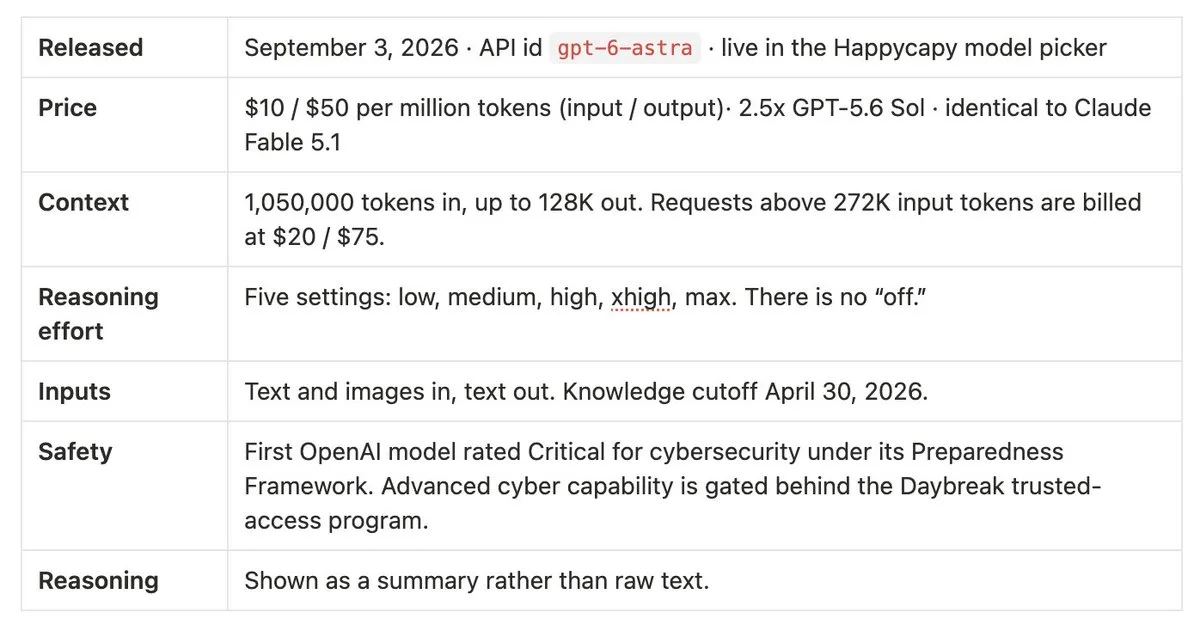
GPT-6 Astra, OpenAI’s newest model, was released on September 3, 2026, and it’s live in the Happycapy model picker now. The list price is $10 per million input tokens and $50 per million output, the same as Claude Fable 5.1, which shipped 48 hours earlier. It has a 1.05-million-token context window, up to 128K tokens of output, and five reasoning-effort settings from low to max. This article covers three things: what actually changed, what people built with it in its first 72 hours, and how to get good work out of it.
Start here · The 20-second question
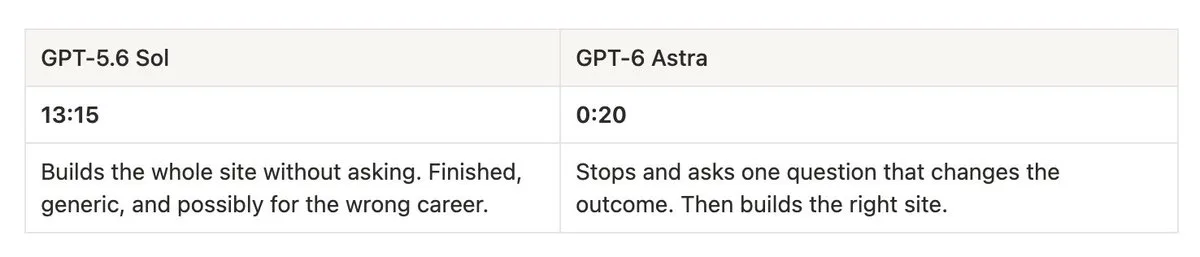
Every model launch comes with a demo, and OpenAI’s own side-by-side is the one worth remembering. Two models get the same brief: build me a personal website for my career change. GPT-5.6 Sol, the previous flagship, puts its head down and works. Thirteen minutes and fifteen seconds later, it hands over a finished site. GPT-6 Astra works for twenty seconds. Then it stops and asks: which career are you moving into?
For three years, every upgrade has meant more: more benchmarks, more tokens, more things done faster. This is the first one whose headline behavior is stopping to ask. OpenAI’s documentation puts it plainly: Astra “asks focused questions when the answer could change the outcome.”
That’s one half of what changed. The other half is why your timeline has been full of Blender screens all week. Astra doesn’t only write code; it sits down at the computer and uses the software. Put the two halves together and you get a model that operates a machine and knows when to check with you first, which happens to be exactly what an agent-native computer was waiting for.
The one-line version
Every button is an API now. Happycapy is the computer the agent reaches for.
What shipped · The facts, in one table
Sources: OpenAI’s launch materials and model documentation, September 3, 2026.
The Critical rating is also why the launch arrived four weeks late. On August 7, OpenAI paused parts of Astra’s training after internal evaluations found it could not rule out critical cyber capabilities. It shipped on September 3 carrying the label rather than waiting to lose it.
The numbers · An honest read of the benchmarks
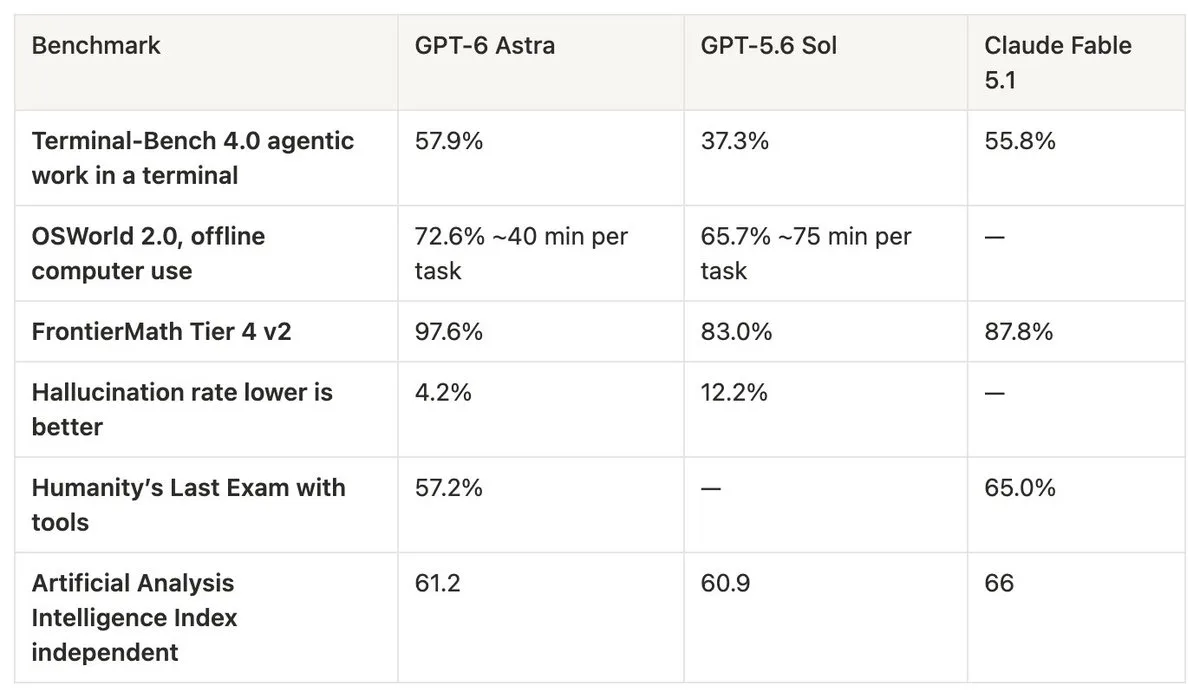
Figures as published by OpenAI on September 3, 2026, except the Artificial Analysis index, which is independent. OpenAI also reports 99.9% on ARC-AGI-3; that figure requires a stateful harness and a run costing tens of thousands of dollars, and ARC Prize’s independent stateless runs land between roughly 17% and 63% depending on effort. Read it as a ceiling, not a default.
Read the table top to bottom and a pattern appears. Everywhere a model has to do things, hold a terminal session, drive a desktop, grind through a proof, Astra jumps. Everywhere a model has to be clever in a single answer, it barely moves: the independent index puts it three tenths of a point above Sol, and on Humanity’s Last Exam it trails Fable 5.1 by eight points. So here is the honest one-liner. Astra isn’t much smarter than Sol. It’s much more capable. Those are different things, and this launch is the clearest sign yet that the frontier has stopped being about the first one.
72 hours · What the internet built with it
Within a day of launch, the demos stopped being about text. They were about software, with Astra at the keyboard: Blender, Unreal Engine, Final Cut, KiCad, even Microsoft Paint. Here is a map of the first 72 hours in the builders’ own words. Every card links to the original post. The claims are theirs, and we haven’t reproduced them.
3D and space
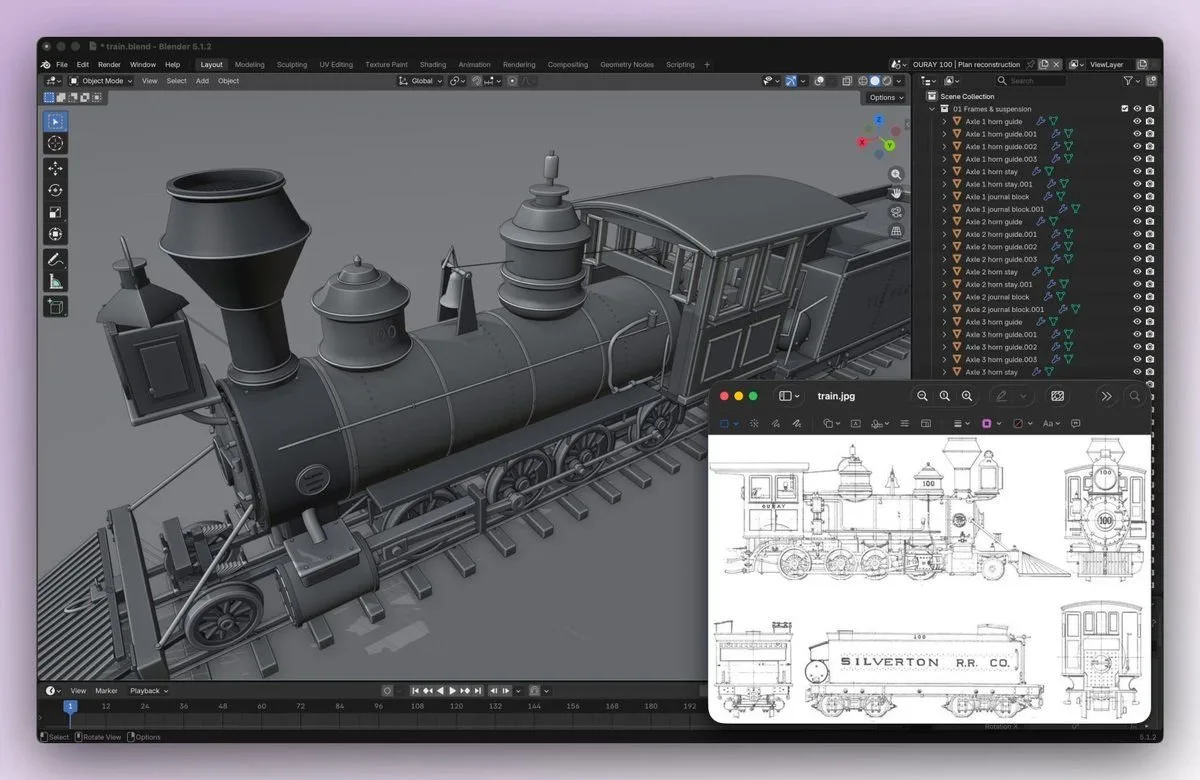
A detailed steam locomotive model in Blender, reconstructed by GPT-6 Astra from an old drawing.
A steam train, from a drawing. Tom Krcha gave Astra an old drawing of a locomotive and asked for it in Blender. “After few minutes it crafted 3,295 fully editable detailed objects.” (@tomkrcha)
The Palace of Fine Arts in San Francisco rendered in Blender by GPT-6 Astra.
A landmark, overnight. Sharif Shameem had Astra recreate San Francisco’s Palace of Fine Arts in Blender. By the builder’s account it gathered its own reference photos, pulled column dimensions from a Library of Congress scan, and rendered while he slept. (@sharifshameem)

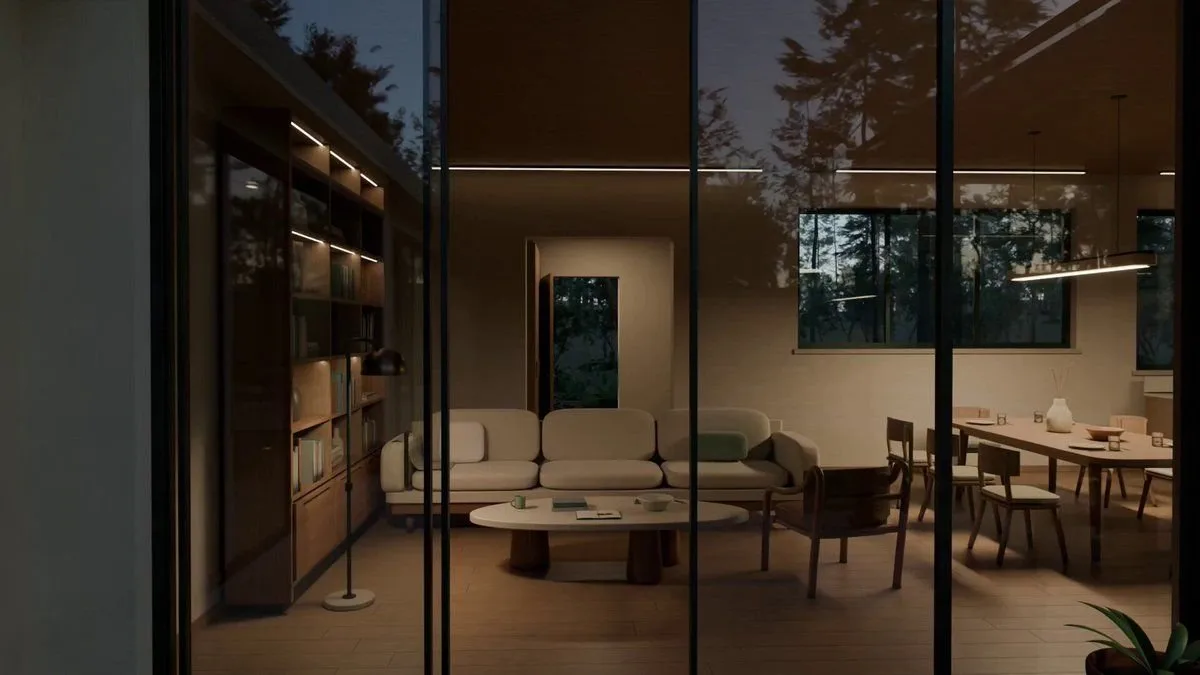
A modern house modeled in Blender and converted into a walkable Unreal Engine 5 scene.
[OpenAI launch demo] Blender to Unreal. Thomas Ricouard, on OpenAI’s model team, showed how the launch-post demo house was built: “From a Blender scene to a Unreal Engine 5 walkable experience.” (@Dimillian)
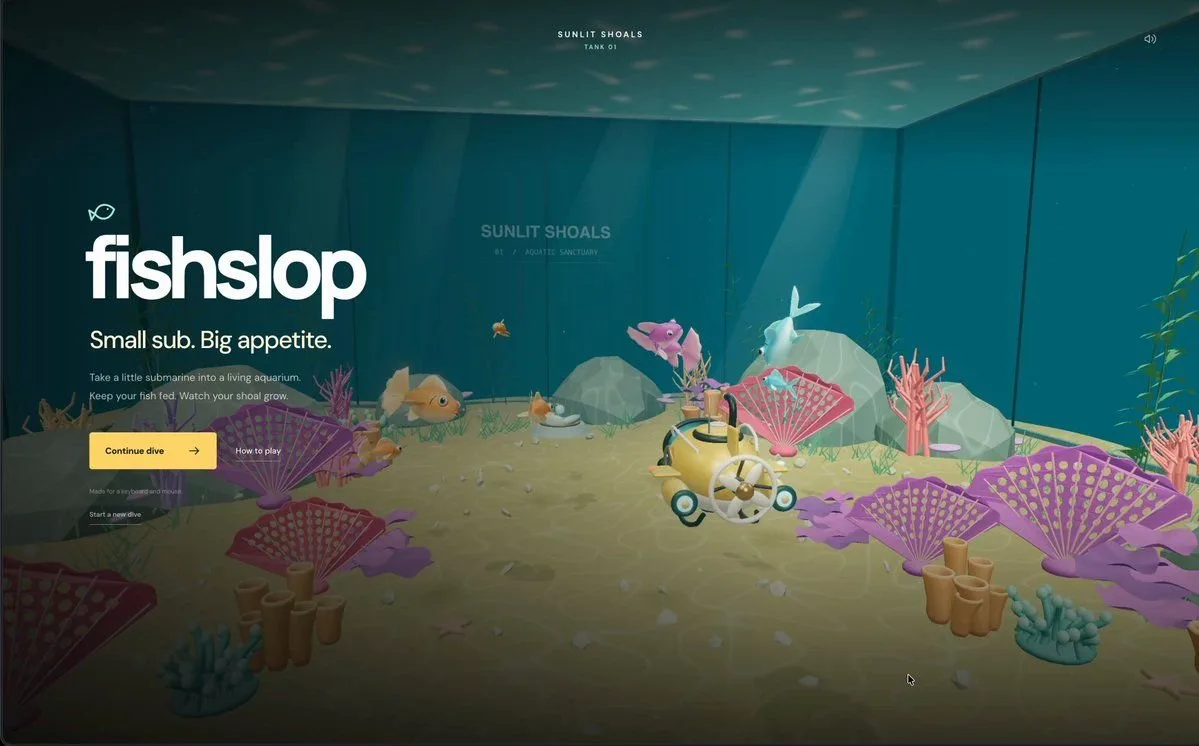
A one-shot 3D browser game generated by GPT-6 Astra.
A game in one shot. Theo’s verdict: “world class at Blender and 3 dimensional reasoning. This was a 1-shot game it created, all running in browser.” (@theo)
Games
Tidal Rush, a browser kart-racing game built by GPT-6 Astra.
[OpenAI launch demo] An eight-player kart racer. Tidal Rush, built by Pietro Schirano with Sites inside ChatGPT and featured by OpenAI at launch: eight racers, three laps, drifting, items, playable in a browser. (Pietro Schirano · via @goofyninjaaa)
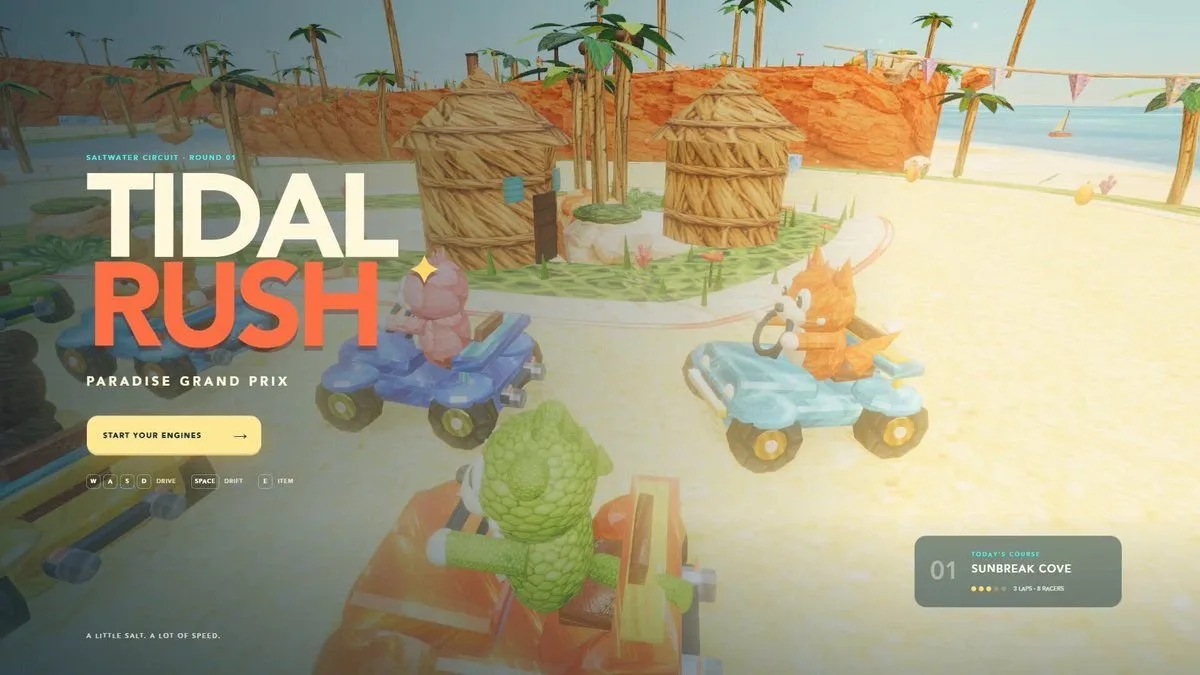
Chart comparing time for GPT models to become Pokémon Champion: Astra 18h 12m, Sol 96h 35m.
Pokémon Champion in a day. Screenshots only, “no RAM, no hints, no walkthrough.” Astra finished in 18 hours 12 minutes. Sol needed 96 hours 35 minutes. GPT-5.5 “still hadn’t finished after 218 hours.” (@Clad3815)
Desktop software
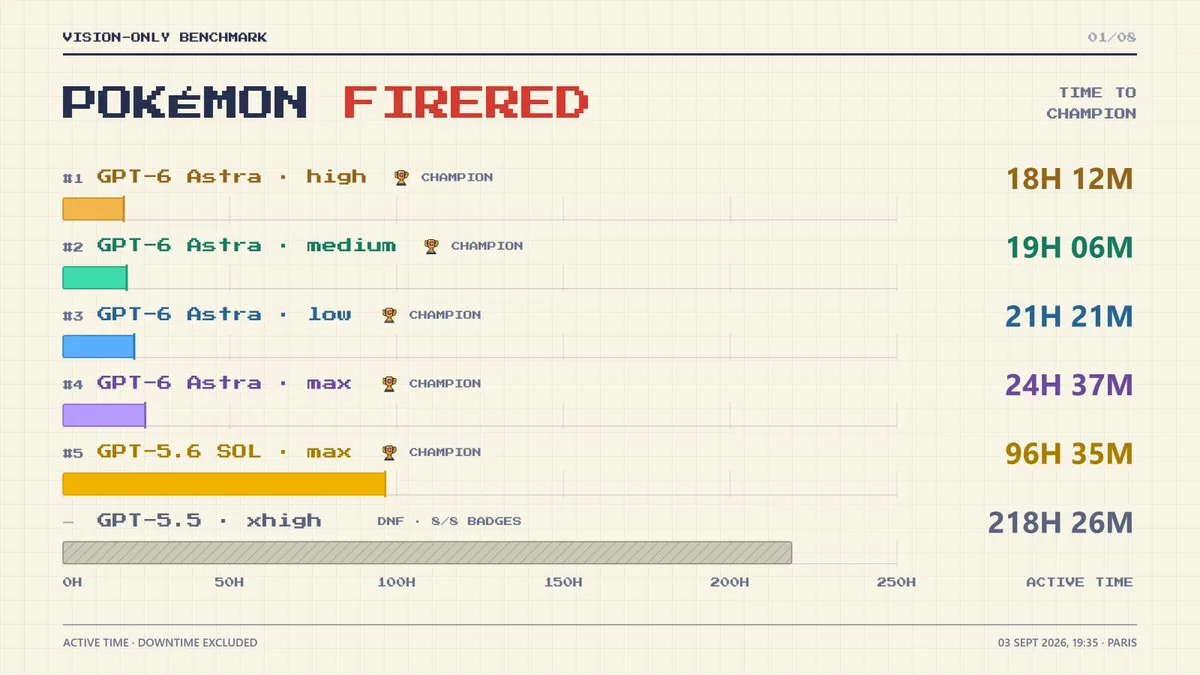
GPT-6 Astra setting up a video edit in Final Cut Pro.
Final Cut, set up for you. Ben Davis asked Astra to “setup the vid I just recorded in Final Cut (import clips, color grading, sync clips, etc.) to get ready to edit,” and filmed his editor’s reaction. (@davis7)
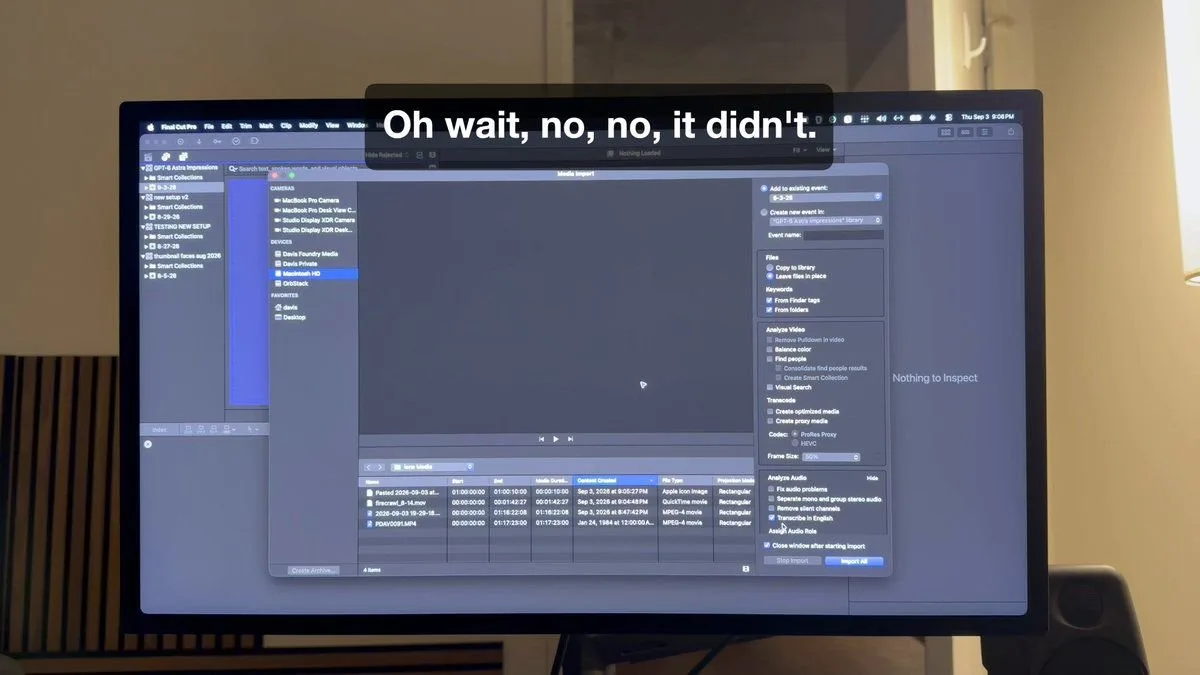
GPT-6 Astra drawing a portrait stroke by stroke inside Canva.
A portrait, drawn in Canva. Not generated: drawn, picking brushes and dragging strokes on the canvas. Zachi’s full caption: “Told GPT-6-Astra to draw me in @canva. What the ffffffff.” (@iam_zachi)
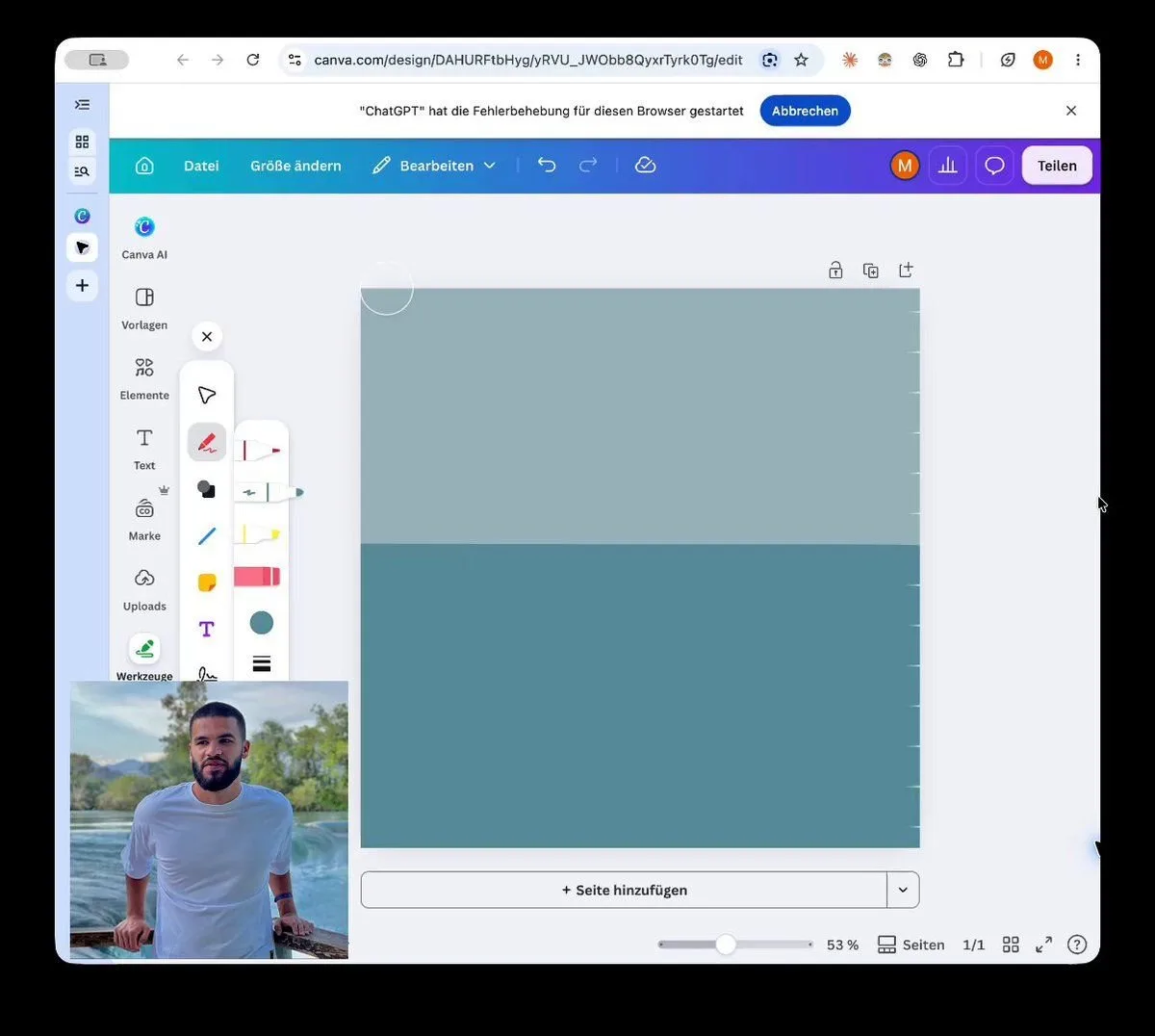
GPT-6 Astra laying out a printed circuit board in KiCad.
A circuit board in KiCad. Kai Yang: “GPT-6 Astra doing PCB layout in KiCad.” Layout only, not fabricated or tested, but the software is the real thing electrical engineers use. (@ChihYang04)
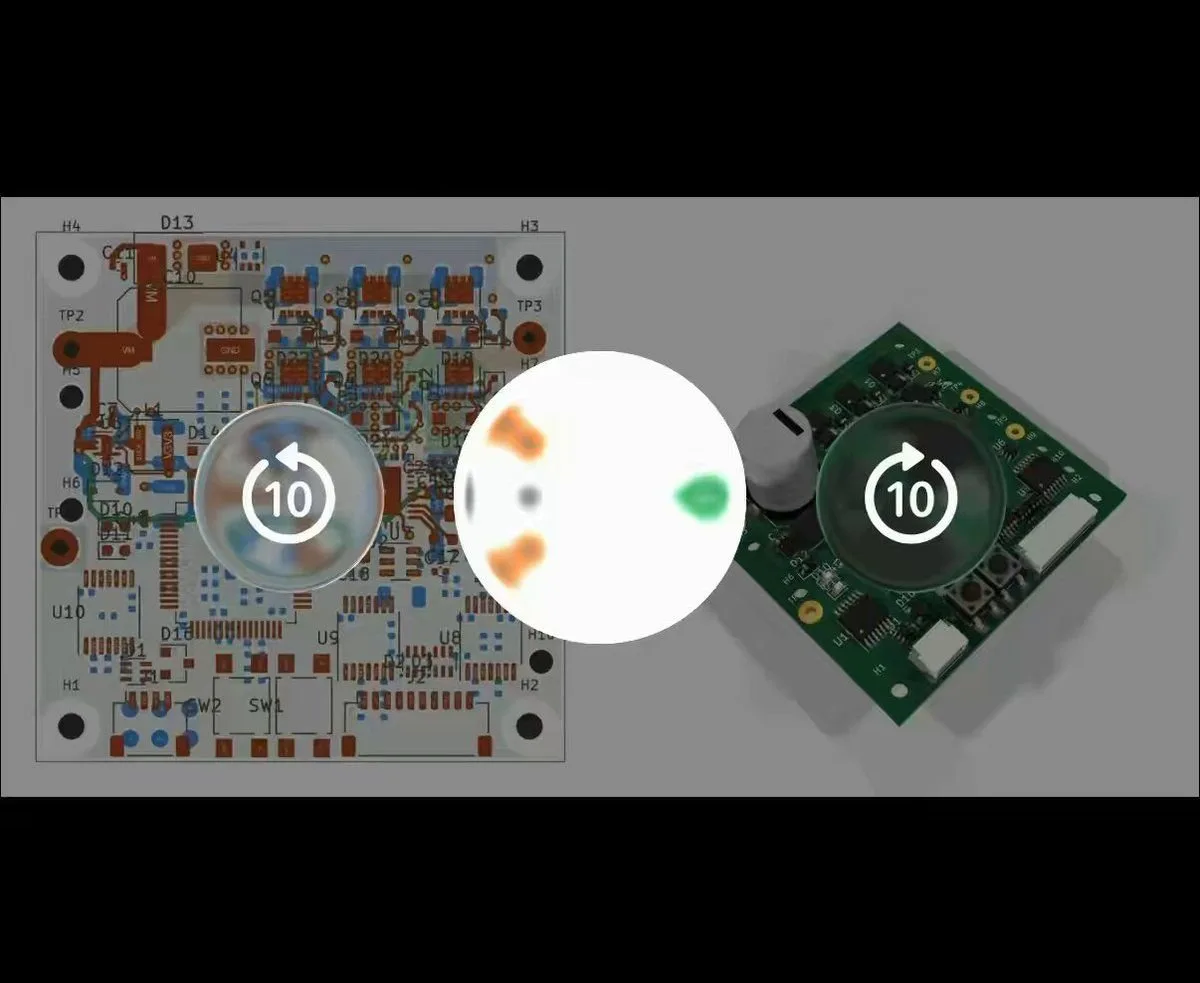
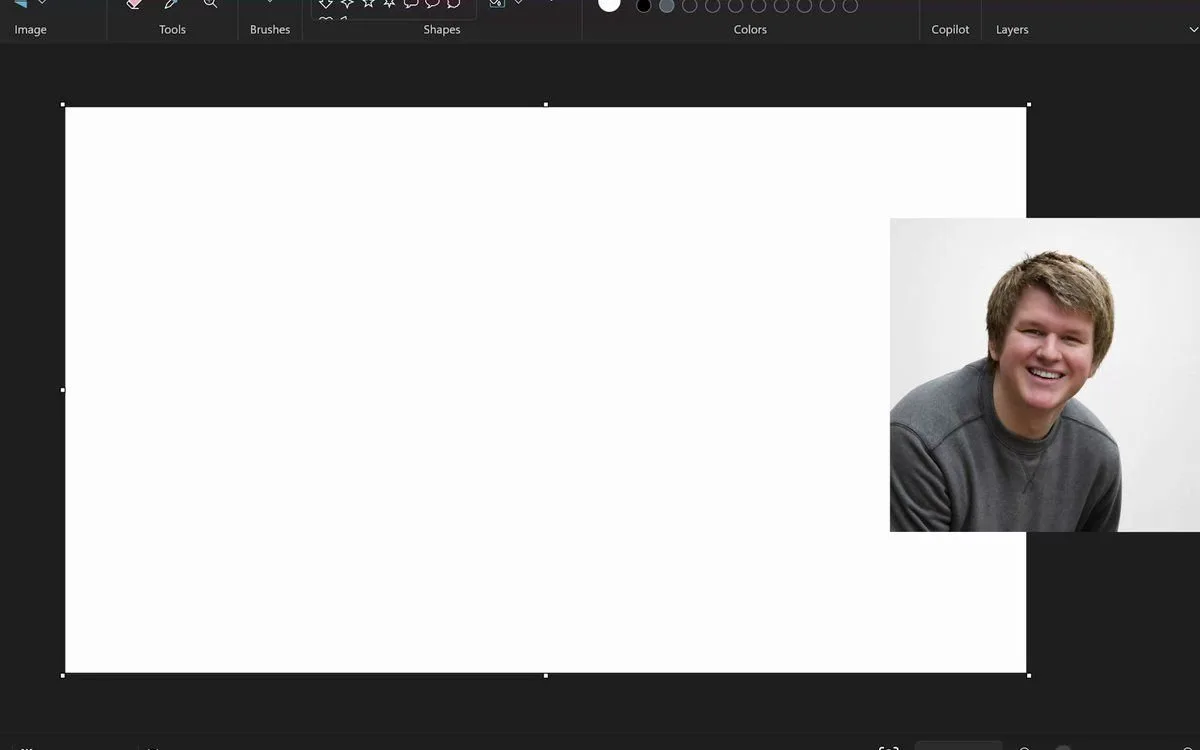
GPT-6 Astra drawing a portrait in Microsoft Paint.
And Microsoft Paint. The lowest-tech demo of the week and one of the most watched: “Tell Astra to open Microsoft Paint and try to draw you.” (@The_Alex)
The sharpest line about this week came from the Chinese writer 数字生命卡兹克 (@Khazix0918), watching his timeline fill with Blender screens: “The GUI may become the most universal API of the agent era.” Decades of professional software never got an AI interface. It turns out they didn’t need one. The model just uses the one people already use.
Why here · A natural fit for an agent-native computer
Happycapy has described itself as an agent-native computer since long before this week: a cloud machine built for an agent to work in, with a browser and a terminal, Connectors into your Notion, GitHub, calendar and your own computer, a library of skills, and automations that run on a schedule. Every model in the picker gets the same machine. What changed on September 3 is that the picker now includes the model OpenAI trained specifically to sit at a computer and use it. Astra was built to operate a computer. This is a computer built to be operated.
You don’t need an API key or a separate developer setup. You pick Astra from the same menu as Fable 5.1, Opus 5, Grok 4.6 and DeepSeek V4, hand it a job, and watch it work. Every step is narrated as it happens, and you can stop it at any time.
How to use it · Three rules from the people who built it
OpenAI published a prompting guide alongside the model, and Eric Provencher, who leads developer experience for Codex at OpenAI, wrote a field note that 3.6 million people read in three days. Between them, the advice comes down to three rules.
Write fewer rules. Provencher: “Many people default to downloading a lot of skills into their projects, but that’s a mistake.” Astra reads skill files and standing instructions more carefully than older models, and conflicting guidance makes it stop. Delete the rules you wrote to babysit a weaker model.
Define “done” before you start. Astra “can feel more tentative about when to stop,” Provencher writes, and may hand you a first draft for review while there’s still work to do. Say what finished looks like: the change made, the tests passing, anything broken elsewhere fixed. Then stop.
Let it ask, and tell it when not to. It asks when the answer could change the outcome. For routine, reversible work, tell it to proceed. OpenAI’s own line: “The user should be approving a concrete, reviewable result.”
Three prompts you can paste, adapted from OpenAI’s guide into plain speech:
Infer my intent from context and bias toward action. Proceed on anything reversible or read-only without asking; pause only before destructive or irreversible steps.
Before you ask me anything, finish everything you're already authorized to do, so that what I approve is a concrete, reviewable result.
Write in clear paragraphs. Use a list only when the items are genuinely parallel. No headings unless I ask for them.
On reasoning effort: start at medium, go to high for genuinely hard problems, and treat max as a research setting. In one independent test on a real debugging task, low found the right answer in 12 seconds for three cents; max took 105 seconds and ten times the money to reach the same conclusion.
Astra vs Fable 5.1 · Two $50 models, one picker
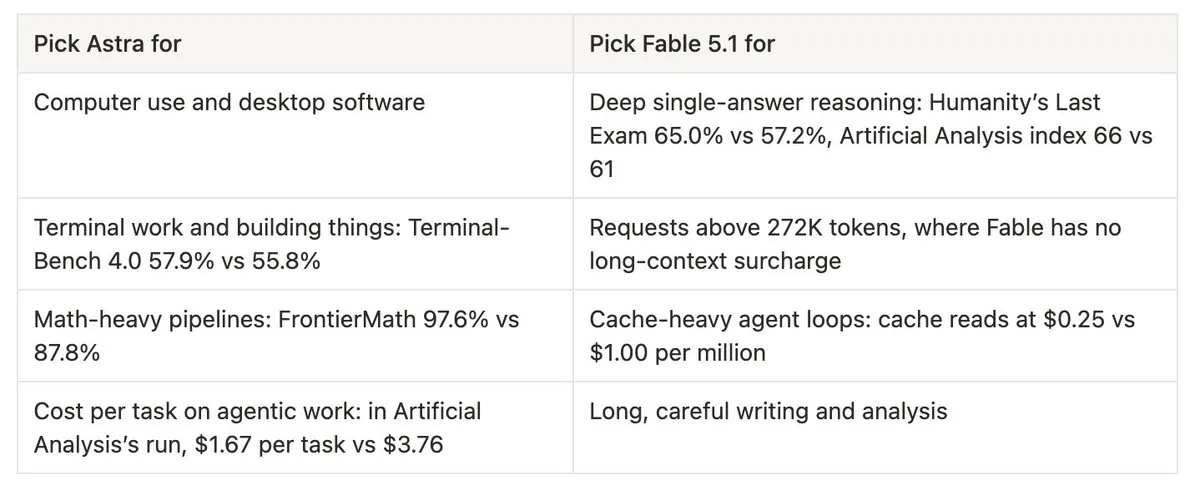
On September 1, Anthropic released Fable 5.1 at $10 / $50. On September 3, OpenAI released Astra at $10 / $50. Two frontier labs, 48 hours, one price tag. If you’re choosing between them by rate card, you can’t. Choose by the shape of the job.
Benchmark figures as published by OpenAI and Anthropic; per-task costs and index scores from Artificial Analysis.
On Happycapy you don’t have to pick once. Both sit in the same picker, and you can switch mid-task: Fable to think the plan through, Astra to go operate the software.
Last thing · What’s shrinking, and what isn’t
卡兹克 had a second line this week: the distance between the intent in your head and the result on your screen is shrinking fast. He’s right, and it’s worth being precise about what’s shrinking. It’s the execution, the five years of shortcuts and menus that stood between an idea and a finished thing. What you put in your head is still yours. Taste, judgment, the sense of which of the 3,295 parts is the wrong one: Astra makes those more valuable, not less, because it removes everything that used to hide them.
So take the advice OpenAI’s Codex team gave its own users this week. Clean house, then go build something you wouldn’t have attempted before. The model is in the picker. The computer is already on.
Conclusion
GPT-6 Astra is OpenAI’s newest model, released September 3, 2026 and live now in the Happycapy model picker. It lists at $10 per million input tokens and $50 per million output, the same price as Claude Fable 5.1, with a 1.05M-token context window and five reasoning-effort settings. Its gains are in agentic work rather than raw intelligence: Terminal-Bench 4.0 57.9% (vs 37.3% for GPT-5.6 Sol), OSWorld 2.0 computer use 72.6% at roughly half the time per task, FrontierMath Tier 4 97.6%, while the independent Artificial Analysis index moves only from 60.9 to 61.2. In its first 72 hours builders used it to operate Blender, Unreal Engine, Final Cut Pro, KiCad and Microsoft Paint directly. Happycapy is an agent-native computer, a cloud machine with a browser, terminal, Connectors, skills and automations, where Astra, Fable 5.1, Opus 5, Grok 4.6 and DeepSeek V4 share one model picker under one subscription with no API keys.
Hand it the mouse: GPT-6 Astra is in your Happycapy model picker now, next to Fable 5.1, Opus 5, Grok 4.6 and twenty other frontier models. One subscription, no API keys. Bring the job you never got around to.
Open the model picker at happycapy.ai →